
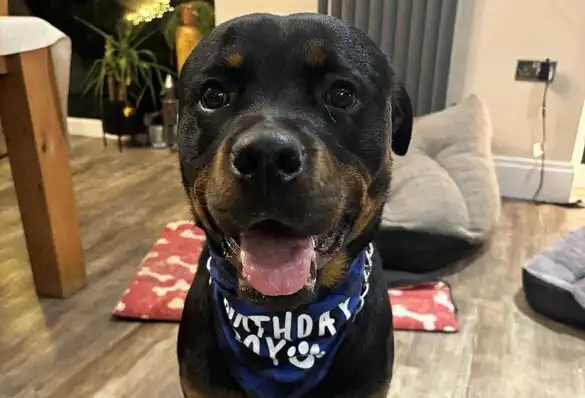
Gordon came into rescue in late October 2025 as an underweight ten-month-old Rottweiler with a painful paw and limited household experience. Veterinary checks, foster care and patient training helped him recover, and he was adopted on 6 November by the family caring for him.
Health care and home learning progressed together
The first tasks were practical: examine the paw, restart routine veterinary care, improve nutrition and allow him to sleep after the disruption of moving. Once comfortable, Gordon showed a playful young dog who needed help with manners rather than punishment.
Living with his foster sisters gave him social reference points, while the family taught clear household communication—including the bell he learned to ring for the garden. Those developments made the foster-to-adopt decision evidence-based.
Recovery and learning together
Gordon arrived underweight with a damaged claw that required assessment. His paw did not need further treatment after the veterinary check, while nutrition and routine helped him begin building condition.
Short lessons, including the garden bell, allowed him to succeed without turning every interaction into physical control of a large adolescent dog.
Life with his canine sisters
His new sisters became regular playmates. By his first birthday update, the dogs were walking and playing well together, with the family continuing supervision and giving them time to rest separately.
A visible measure of bravery
Gordon’s progress was not an abstract claim that he was brave. He accepted veterinary handling, learned a new communication behaviour, gained needed weight and relaxed enough to play. Those are the concrete changes now carrying him forward.