
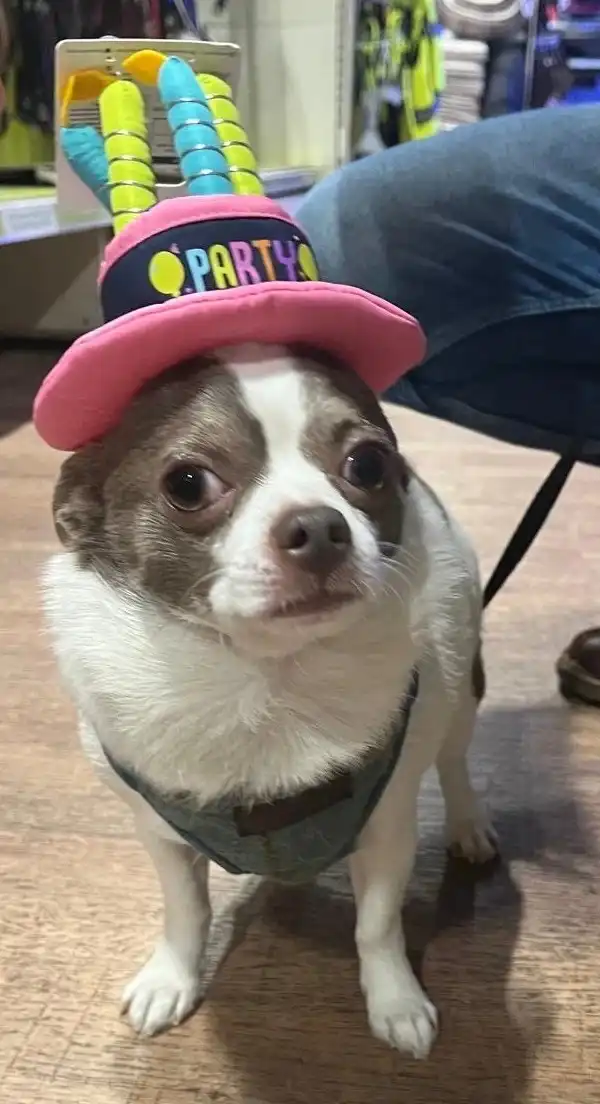
Rupert came into the rehoming process as a four-year-old Chihuahua who was affectionate once he felt secure but cautious around unfamiliar situations. After assessment, he was adopted on 10 March 2026 into the quiet, low-pressure routine his behaviour indicated he needed.
His small size did not remove the need for proper matching
Rupert was house trained, generally sociable with other dogs and happiest near people he trusted. He could be unsure around tall men at first, so the rescue looked for adopters who would allow him to approach rather than lifting or crowding him.
The successful home offered short walks, warm resting places and steady company without a noisy schedule. That was a deliberate match to his observed pace, not simply a home willing to take a small dog.
The dog observed in care
Rupert was house trained, affectionate and generally sociable with other dogs. He could be unsure around tall men at first, so gentle introductions and room to approach were more useful than enthusiastic handling.
Once comfortable, he stayed close to his people and enjoyed quiet attention. His small size did not make him a dog who wanted to be carried through every situation; he benefited from predictable choices and a calm environment.
A home matched to his pace
Applications were compared through home checks because several households appeared suitable. The selected home could offer the low-key routine Rupert preferred, with manageable walks and plenty of company without a noisy or highly active setting.
What the placement gives him
Rupert can now repeat the days that suited him in assessment: a brief outing, time near his people and long periods of undisturbed rest. The success is not a dramatic transformation. It is a small dog no longer being asked to live at the wrong pace.