
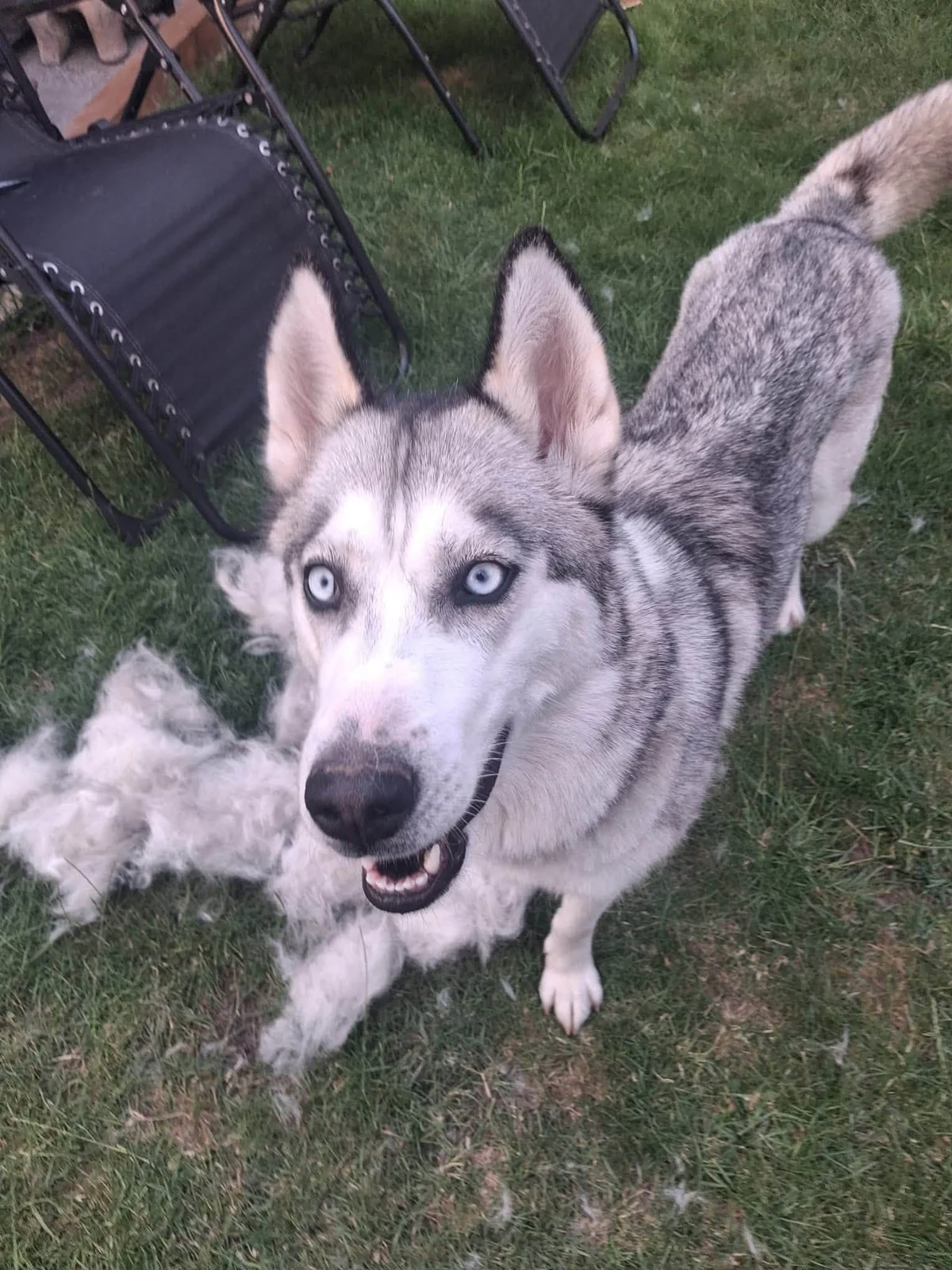
Sapphire’s rehoming began when increased working hours meant the 17-month-old Siberian Husky was spending too much time alone. She entered rescue care on 15 July 2026, was assessed as an affectionate and active young dog, and four days later left as Sky for a family ready to continue her training.
Why the move became necessary
Her owner had tried to cover the longer working day with help from relatives and friends, but the arrangement was no longer sustainable. Rehoming was therefore about finding a household able to provide more company, exercise and structure rather than correcting a serious behavioural problem.
Assessment also identified practical needs that shaped the match: a secure garden, a cat-free home, owners familiar with energetic breeds and a commitment to lead work and recall training. She arrived slightly lean and in need of routine veterinary and grooming care, so the successful family needed to accept both the enjoyable and the ordinary parts of taking her on.
A match built around a young Husky
Sky is friendly, intelligent and curious, but she can also be independent and strong-minded. Her adopters understood that those qualities require consistent boundaries, mental stimulation and patient handling rather than an expectation that she would arrive as a finished family pet.
That understanding was central to the decision. The family were prepared to maintain predictable meals, quiet rest periods and clear expectations while learning how Sky communicates in a new environment.
Freedom without unnecessary risk
The country park near her home will provide varied walking routes, while a secure freedom field gives the family somewhere to work on recall and controlled exercise. The aim is to broaden her world gradually without asking for reliability before it has been built.
During the first weeks, familiar routes and short training sessions will matter more than covering distance. Her family can increase activity as she becomes responsive and relaxed in the routine.
What happens next
Sky now has people who recognise both her potential and the work required to support it. Their immediate priorities are calm settling, recall practice and reinforcing attention around distractions.
Her new name marks the change, but the practical foundation is more important: a secure home, suitable exercise and adopters committed to continuing the plan agreed with the rescue.